Blog Feed
Loading...
Feed note
The articles displayed in our blog feed are retrieved automatically every three hours. Content is selected by the system on the basis of predefined keywords. Each item is produced by, and sourced from, the website identified in the relevant link. All rights, including ownership, and all responsibility for the content of each individual feed remain with the respective content owner/publisher.
Human Resources Management

AI is reshaping leadership roles faster than succession plans can keep up
Long-tenured workers are least prepared for layoffs, new research finds

Employees who embrace ‘corporate bullshit’ make worse decisions
The HR Podcast Ep 5: Antisemitism, temperature and firing HR
Why HCM rollouts are failing and what HR can do about it
Google, Apple top early-career workers’ engagement findings
Cisco, Standard Chartered latest to cite AI as explicit driver of layoffs
Why tech bloat is no longer a hidden inefficiency

900,000 Americans searched ‘work abroad’: Here’s where they’re headed
Despite record search interest in Canada and Spain, a different country ranks first for American workers choosing to relocate abroad.
The post 900,000 Americans searched ‘work abroad’: Here’s where they’re headed appeared first on HR Executive.
Immigration enforcement concerns expose credibility gap for employers
In a recent survey, employees cite the need for clearer communication as employer readiness perceptions lag expectations.
The post Immigration enforcement concerns expose credibility gap for employers appeared first on HR Executive.

The hidden leadership pipeline problem: Why do middle managers stop advancing?
Meta begins shedding 8,000 employees
Most hiring automation stops at the apply button, study finds
A 2026 benchmark report finds hiring automation has improved candidate attraction but largely missed the qualification stage.
The post Most hiring automation stops at the apply button, study finds appeared first on HR Executive.
AI is coming for Workday (but not in the way you think)
HR teams know the pain of manual workarounds and more for unwieldy programs. And yes, AI-native challengers are coming for those weak spots.
The post AI is coming for Workday (but not in the way you think) appeared first on HR Executive.

HR Tech Asia: Avoiding ‘work slop’, CHROs on accountability
Against the backdrop of accelerating AI change, HR Tech Asia 2026 opens in Singapore, drawing leaders to tackle the future of work.
The post HR Tech Asia: Avoiding ‘work slop’, CHROs on accountability appeared first on HR Executive.
New research highlights 3 fast-moving global HR trends
Three key employment law themes from Littler's Q1 2026 Global Guide are amounting to real compliance pressure for multinational employers.
The post New research highlights 3 fast-moving global HR trends appeared first on HR Executive.
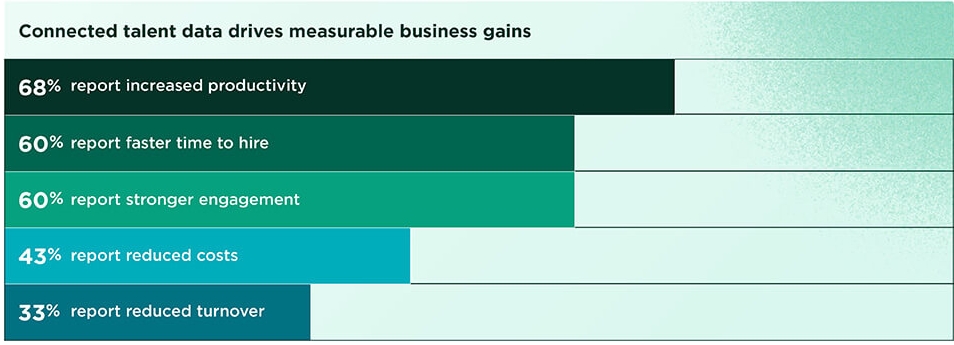
Disconnected talent data: a 3% cost to payroll
Workforce data fragmentation is draining budgets and slowing decisions. Here's what the numbers say and why it's hard to fix.
The post Disconnected talent data: a 3% cost to payroll appeared first on HR Executive.

Reality of employee experience fails to match HR’s ratings

The post Reality of employee experience fails to match HR’s ratings appeared first on Personnel Today.
Why 75% of key talent leaves after M&A deals: EY research
New EY research finds people factors and HR teams are make-or-break elements as M&A deal activity surges in 2026.
The post Why 75% of key talent leaves after M&A deals: EY research appeared first on HR Executive.

FREE Character Reference Letter Template + How To Develop a Clear Process
Talent Management
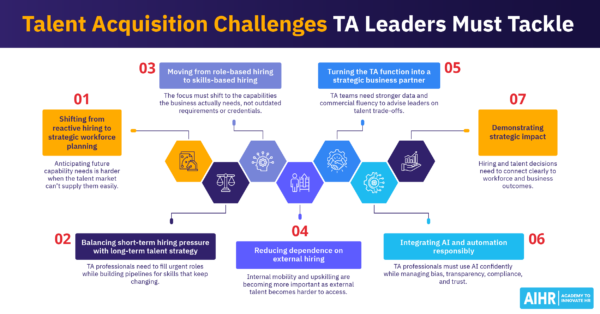
7 Talent Acquisition Challenges TA Leaders Must Solve
Untapped Talent: Why Companies Overlook Former Federal Employees

The enterprise case for AI interviewing: scale without sacrificing quality

Strikes could be a midsummer night’s theme for the West End

Access to Work recruitment drive hopes to clear backlog

The post Access to Work recruitment drive hopes to clear backlog appeared first on Personnel Today.

The philosophy driving UNIQLO’s HR strategy: Made for all, hired from all
In an industry plagued by high turnover and disengaged employees, the Japanese retail giant is betting on a cradle-to-career talent strategy—and the numbers suggest it is paying off.
The post The philosophy driving UNIQLO’s HR strategy: Made for all, hired from all appeared first on HR Executive.
Your Job Isn’t Your Purpose
The Human Leadership Advantage AI Can’t Replace
The danger of AI in HR is not that it will replace human leaders. It’s that human leaders, awestruck by its capabilities, will replace themselves. Human leadership in this era of AI is being discussed everywhere, but largely on AI’s terms. This fixation has an historical counterpart from the late 18th century. Then, the courts […]
The post The Human Leadership Advantage AI Can’t Replace appeared first on TalentCulture.
The Human Leadership Advantage AI Can’t Replace
Succession Planning: What Gets Missed When AI Takes All the Attention
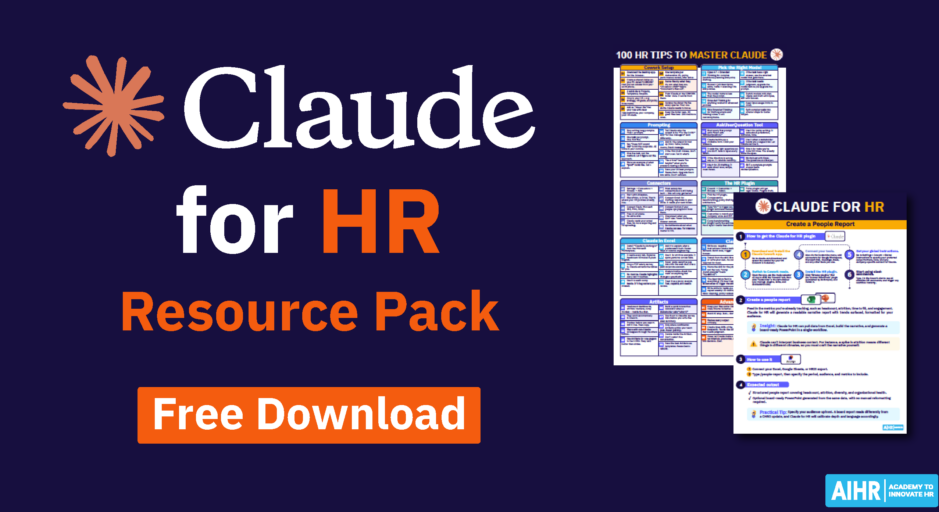
Claude for HR: Your Ultimate Resource Pack [2026 Edition]
Claude can help HR professionals move faster on recurring work, from drafting job offer letters to creating people reports and reviewing policy documents. Used well, it can support tasks like compensation analysis, onboarding planning, performance review drafting, and HR reporting. The key is knowing how to set it up, what to ask, and where human…
The post Claude for HR: Your Ultimate Resource Pack [2026 Edition] appeared first on AIHR.
Today’s Top Talent Challenges for HR Pros – and 17 Resources to Prepare Now
From Point Solutions to Platforms: How AI is Rewriting HR Tech
Sponsored by Harbinger Group. Today, we are diving into how AI is reshaping HR tech and what that really means beyond the hype. Our guest brings a long view of the space, from point solutions to today’s platform shift. We talk about why connected data is now mission-critical, what leaders should be rethinking in their […]
The post From Point Solutions to Platforms: How AI is Rewriting HR Tech appeared first on TalentCulture.
From Point Solutions to Platforms: How AI is Rewriting HR Tech

Global Human Capital Trends: 3 Ways to Super-Charge Mid-Market Growth
Thursday, June 25, 2026 at 2:00 pm ET
Join this free webcast to learn the important choices HR leaders must make to optimize human performance in a rapidly changing world.
The post Global Human Capital Trends: 3 Ways to Super-Charge Mid-Market Growth appeared first on HR Executive.
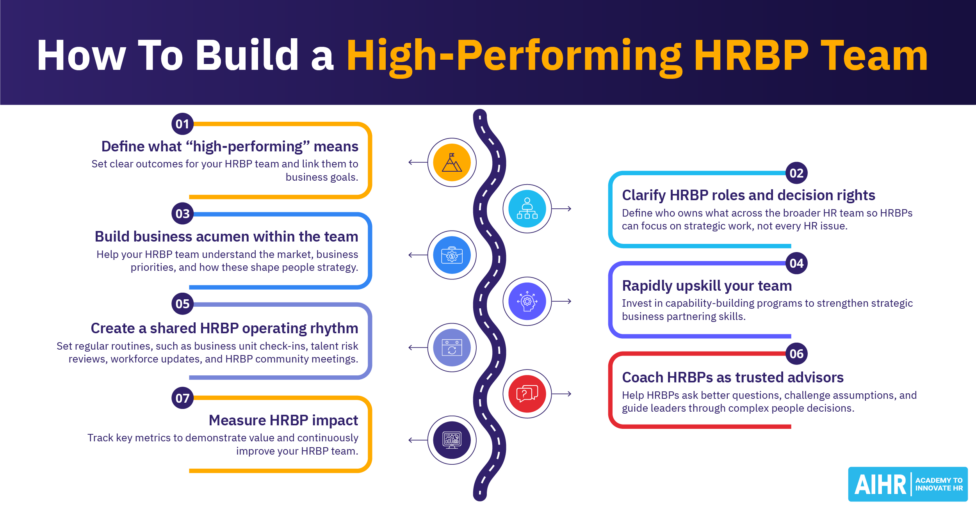
How To Build a High-Performing HRBP Team: A Guide for HR Leaders
An effective HRBP team is a strategic partner for the organization’s business leaders, understands the company’s priorities, and develops HR strategies that support these goals. Organizations with efficient HR Business Partners report better employee performance and profits of 22% and 9%, respectively. In this article, we discuss how to build a successful HR business partner…
The post How To Build a High-Performing HRBP Team: A Guide for HR Leaders appeared first on AIHR.
Why AI-Generated Applications Are Creating a New Hiring Problem (And What HR Can Do About It)
Every recruiter who has opened their ATS in the past year has felt it: something has shifted. The applications look different. They read smoother, hit more keywords, and sound eerily similar to one another. That uniformity is not a coincidence. According to a 2025 report from Career Group Companies, roughly 65 percent of job candidates […]
The post Why AI-Generated Applications Are Creating a New Hiring Problem (And What HR Can Do About It) appeared first on TalentCulture.
Why AI-Generated Applications Are Creating a New Hiring Problem (And What HR Can Do About It)
Building a Scalable Culture in the Age of AI and Rapid Growth
Artificial Intelligence is changing the way companies work faster than most organizations are prepared for. In high-growth companies, this pressure is even stronger. Leaders are expected to grow faster, hire faster, make better decisions and increase productivity often at the same time that AI is changing roles, processes and expectations across the business. As a […]
The post Building a Scalable Culture in the Age of AI and Rapid Growth appeared first on TalentCulture.
What L&D Leaders Get Wrong About The 70-20-10 Rule
For decades, the 70-20-10 model has shaped how organizations think about learning and development. The premise is simple and appealing: roughly 70% of learning comes from experience, 20% from social interaction and mentorship, and just 10% from formal instruction. It’s elegant. It’s influential. And in many cases, it’s right. But there’s a catch. When the […]
The post What L&D Leaders Get Wrong About The 70-20-10 Rule appeared first on TalentCulture.
Artificial Intelligence
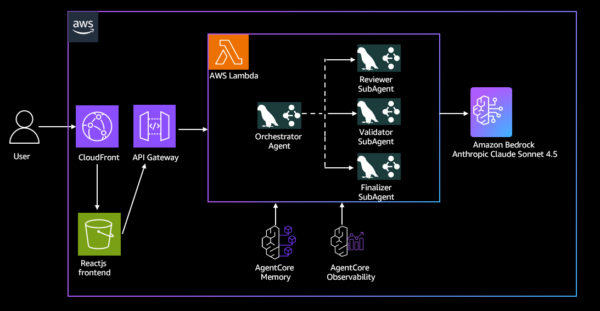
Build highly scalable serverless LangGraph multi-agent systems in AWS with Amazon Bedrock AgentCore
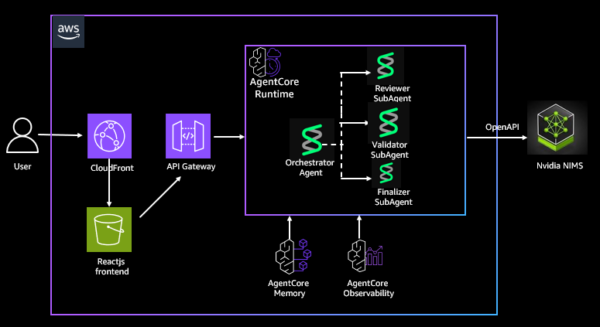
Build high-performance generative AI systems with Strands Agents, NVIDIA NIM, and Amazon Bedrock AgentCore

From idea to AI app: Creating intelligent research assistants with Strands
It’s time to address the looming crisis in entry-level work.
The Hidden Bottleneck in Quantum Machine Learning: Getting Data into a Quantum Computer

Alibaba is designing AI chips around agents, and that changes what the race is actually about
Alibaba has unveiled a new AI processor built specifically for AI agents, pairing the chip announcement with a multi-year silicon roadmap and a new large language model, signalling that the company is building an integrated AI stack, not just filling a gap left by US export controls. The Zhenwu M890, developed by Alibaba’s semiconductor subsidiary […]
The post Alibaba is designing AI chips around agents, and that changes what the race is actually about appeared first on AI News.

Nvidia’s Vera chip is the US$200 billion bet Jensen Huang doesn’t want you to overlook
The Nvidia Vera chip is rarely the headline when earnings beat estimates, but it should be. When Nvidia reported Q1 revenue of US$81.62 billion on Wednesday, beating analyst estimates of US$78.86 billion, and guided Q2 at US$91 billion–well above Wall Street’s US$86.84 billion forecast–the numbers did what Nvidia numbers always do: dominate the room. But […]
The post Nvidia’s Vera chip is the US$200 billion bet Jensen Huang doesn’t want you to overlook appeared first on AI News.
Amazon launches Alexa for Shopping as Rufus moves behind the scenes
Amazon has introduced Alexa for Shopping, combining its Rufus shopping chatbot with Alexa+ across its app, website, and Echo Show devices. The assistant can answer product questions, compare items, track prices, and support shopping reminders. It can also handle scheduled shopping actions and eligible automated purchases. The company said Alexa for Shopping combines Rufus’ product […]
The post Amazon launches Alexa for Shopping as Rufus moves behind the scenes appeared first on AI News.
AI is a matter of power, infrastructure and security: TechEx North America
Although visitors to an event like TechEx North America will always want to see the cutting edge front and centre stage, the nuance and detail brought to the show by the speakers and exhibitors mean that it’s sometimes the smaller considerations that need to play big – at least, in the minds of enterprise decision-makers. […]
The post AI is a matter of power, infrastructure and security: TechEx North America appeared first on AI News.

Enterprise AI roadblocks and roadmaps, security and physical AI: Day two at TechEx
Day two of TechEx North America has been more of a deeper, critical examination of AI in the enterprise, but with a optimistic bent. The AI and Big Data programme opened with reference to what was termed the “AI graveyard” – that is, AI projects that seem to perform well in pilot, but don’t seem […]
The post Enterprise AI roadblocks and roadmaps, security and physical AI: Day two at TechEx appeared first on AI News.

Deloitte: Scale ‘autonomous intelligence’ for real growth
Enterprise leaders must progress past generative applications and scale “autonomous intelligence” to capture real growth. Generating text or summarising internal communications offers localised productivity improvements, yet these abilities rarely alter the core cost or revenue structure of a large organisation. Enterprises are now focused on deploying systems capable of independent execution. Leaders are demanding applications […]
The post Deloitte: Scale ‘autonomous intelligence’ for real growth appeared first on AI News.
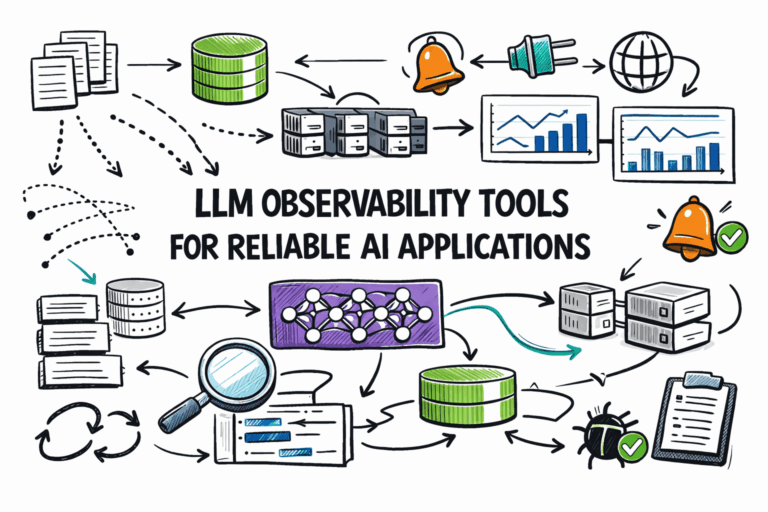
LLM Observability Tools for Reliable AI Applications
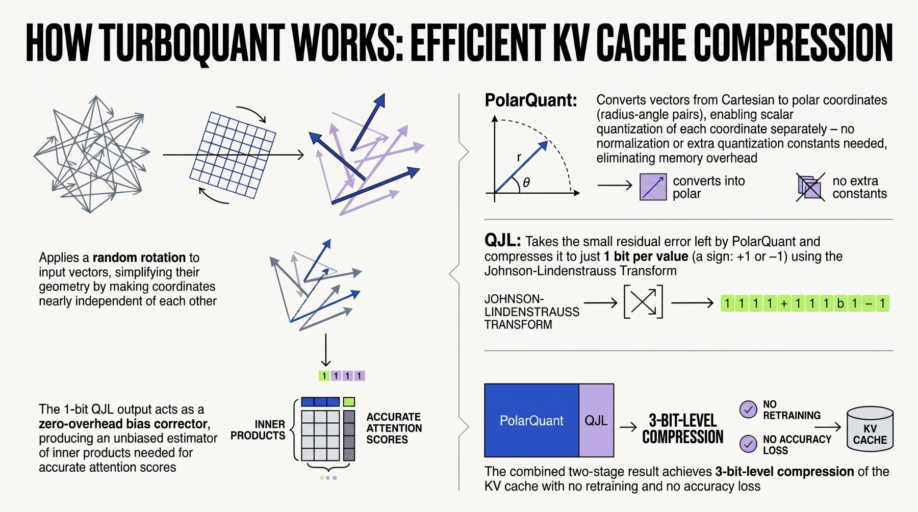
Effective KV Compression with TurboQuant
Establishing AI and data sovereignty in the age of autonomous systems
Physical AI moves closer to factory floors as companies test humanoid robots
British technology company Humanoid will deploy humanoid robots at factories operated by German industrial supplier Schaeffler, Reuters reported. The two companies’ agreement covers an estimated 1,000 to 2,000 robots in Schaeffler’s global manufacturing sites by 2032, according to a Humanoid spokesperson. The companies have not disclosed the contract value. The first deployment is scheduled between […]
The post Physical AI moves closer to factory floors as companies test humanoid robots appeared first on AI News.
AI is ready to take over Python programming, but not much else
Tests of how well 19 large language models (LLMs) complete and perform complicated multi-step tasks has shown that they are both error-prone and, in many cases, unreliable.
The findings are contained a preprint paper, LLMs Corrupt Your Documents When You Delegate, written by Microsoft researchers Philippe Laban, Tobias Schnabel and Jennifer Neville based on a benchmark they created called DELEGATE-52 that allowed them to simulate workflows that might be part of a knowledge worker’s tasks. The paper is currently under review.
They said that the benchmark contains 310 work environments across 52 professional domains including coding, crystallography, genealogy and music sheet notation. Each environment consists of real documents totaling around 15K tokens in length, and five to 10 complex editing tasks that a user might ask an LLM to perform.
And, they stated in the paper’s abstract: “Our analysis shows that current LLMs are unreliable delegates: they introduce sparse but severe errors that silently corrupt documents, compounding over long interaction.”
Those mistakes are significant, they said. “The findings show that current LLMs introduce substantial errors when editing work documents, with frontier models (Gemini 3.1 Pro, Claude 4.6 Opus, and GPT 5.4) losing an average 25% of document content over 20 delegated interactions, and an average degradation across all models of 50%.”
Benchmark exercise receives a thumbs up
Brian Jackson, principal research director at Info-Tech Research Group, found the findings very interesting. “Putting a list of LLMs to the test across different work domains yields a lot of useful insights,” he said. “I think this type of benchmark exercise could be helpful to enterprise developers who are looking to leverage agentic AI to automate specific workflows and understand the limits of what can be achieved.”
However, he said, “what we shouldn’t conclude from this is that, because these foundation models caused document degradation after 20 edits, they can’t be used to automate work in a certain field. It just means they can’t do all of the work as they are currently constructed.”
But, Jackson stated, “in an enterprise environment where having an accurate output is crucial, you wouldn’t take that approach. You would design the automation flow with stronger guardrails in place to prevent errors. This could be done by using multiple agents that play different roles, such as one that makes the edits and another that checks for errors and makes corrections.”
Sanchit Vir Gogia, chief analyst at Greyhound Research, said, “the Microsoft paper should be read as a serious warning about delegated AI, not as a claim that enterprise AI has failed. That distinction matters. The paper is still a preprint, so it deserves careful handling, but its central question is exactly the one CIOs should be asking: can AI preserve the integrity of complex work over repeated delegation?”
The study, he said, is stronger than what he described as “the usual AI benchmark theatre,” because it tests work products, not just looking at clever one-off answers. “It uses reversible editing tasks, domain-specific evaluators, and a round-trip method to see whether a document returns intact after repeated edits. In too many cases, it does not.”
That is the point, explained Gogia. “This is not merely about hallucinations. It is about artefact integrity.”
AI is ‘not yet trustworthy enough’
He added that the headline finding is “uncomfortable: even the strongest models corrupt about a quarter of document content by the end of long workflows, while average degradation across all tested models reaches roughly 50%. The paper also finds that performance varies sharply by domain. Python is the only domain where most models are ‘ready,’ and the best model reaches that threshold in only 11 of 52 domains.”
AI is not failing because it cannot write, said Gogia, it is failing because it cannot yet preserve.
The study, he pointed out, “is especially useful because it shows how errors accumulate. Bigger documents worsen outcomes. Longer interaction worsens outcomes. Distractor files worsen outcomes. Short tests flatter the system, while longer workflows expose it. That maps rather neatly to the enterprise world, where work is messy, files are stale, context is noisy and the most important documents are rarely the simplest ones.”
The honest conclusion, he said, “is not that AI should be kept out of enterprise workflows. It is that delegated AI is not yet trustworthy enough to be left alone with consequential artefacts.”
When AI edits an important document such as a contract, a ledger, a policy, a codebase, a board paper, or a compliance record, Gogia warned, the enterprise still owns the damage.
Mitigation approaches
In order to prevent that damage, Jackson suggested, enterprises can do additional training and fine-tuning of models to be better adapted to their specific workflows: “These foundation models are very good at doing a lot of different tasks, but less good at doing one specific task very well. So, enterprises that want to achieve that may need to improve the models themselves by training on their own data.”
For example, “[the Microsoft paper] points out one multi-agent setup that led to more degradation instead of less, so the method to detect degradation must be well-designed to be effective,” he said. “Another approach that some enterprise platforms have introduced is a way to deterministically verify the output for accuracy using mathematical verification. So, knowing what domains prove more difficult for a single LLM to automate is useful, as developers can plan to add more verification steps to the process.”
He said, “depending on the model, for example, if it’s totally open source or if it’s proprietary, you can have more flexibility in terms of how much you can customize it. So, an enterprise developer might look at these results, pick the LLM best at automating their desired domain, and then send it in for additional training to master the process.”
People do not disappear
According to Gogia, the paper also shows something more precise than ‘AI still needs people.’ “It shows that AI changes the human layer from production to supervision, validation, and accountability. That is a rather different operating model from the one being sold in many boardroom conversations.”
People, he said, “do not disappear. Their work moves. This is the uncomfortable part for enterprises chasing headcount reduction. The people best placed to catch AI errors are often the same people organizations are hoping to replace, reduce, or redeploy. Remove too much domain expertise from the workflow, and the enterprise also removes the people who know when the AI has quietly damaged the work.”
Expertise becomes more valuable, not less, said Gogia: “The paper reinforces this because stronger models do not merely delete content. They often corrupt it. Weaker models are easier to catch when they visibly drop material. Frontier models are more awkward because the content remains present but becomes wrong, distorted, or subtly altered. That requires knowledgeable review, not casual inspection.”
This article originally appeared on CIO.com.
What Parameter Golf taught us about AI-assisted research
OpenAI introduces Daybreak cyber platform, takes on Anthropic Mythos
OpenAI has unveiled Daybreak, its answer to Anthropic’s Claude Mythos, amid a growing market for frontier AI-powered cyber defense platforms. The initiative combines OpenAI’s large language models, Codex’s agentic capabilities, and integrations with the broader enterprise security ecosystem.
The company said Daybreak is focused on accelerating cyber defense operations and enabling organizations to secure software across the development lifecycle continuously.
Announcing the initiative on X, Sam Altman, CEO at OpenAI, said, “OpenAI is launching Daybreak, our effort to accelerate cyber defense and continuously secure software. AI is already good and about to get super good at cybersecurity; we’d like to start working with as many companies as possible now to help them continuously secure themselves.”
Daybreak takes on Mythos
The surge in AI-driven cyber threats has recently shifted the AI race toward AI cybersecurity models. In April this year, Anthropic unveiled Project Glasswing, built around Claude Mythos Preview. Anthropic described it as a cybersecurity-focused AI system capable of autonomously identifying software vulnerabilities at scale.
While introducing Daybreak, OpenAI explained that deploying AI in modern cyber defense involves three core stages. The first is prioritizing high-impact threats and reducing hours of security analysis to minutes through more efficient AI reasoning and token usage. The second involves generating and testing patches directly within enterprise repositories using scoped access, monitoring, and review. The final stage focuses on sending results and audit-ready evidence back into enterprise systems to track, validate, and verify remediation efforts.
In Daybreak, Codex security is designed to identify and fix vulnerabilities by building an editable threat model from the enterprise’s repository and focusing analysis on realistic attack paths and high-impact code. The system would then validate likely vulnerabilities in an isolated environment. This would help teams to prioritise real, reproducible issues over noisy alerts. This will be followed by automated detection and response, where AI will be able to spot higher-risk vulnerabilities and enable end-to-end automated monitoring.
“The divergence reflects fundamentally different approaches to security and commercialization. OpenAI is positioning Daybreak and GPT-5.5-Cyber as a controlled cyber-defense platform for vetted defenders, focused on operational workflows such as vulnerability detection, patch validation, malware analysis, and secure software development,” said Pareekh Jain, CEO at EIIRTrend & Pareekh Consulting. “Strategically, Daybreak helps OpenAI counter the perception that Anthropic leads in frontier cyber AI. Instead of relying on a single secretive model, OpenAI is building a scalable cyber-defense ecosystem integrated into enterprise workflows and developer environments.”
Jain said Anthropic, by contrast, treats Mythos as a far more sensitive dual-use cyber-intelligence system with stronger offensive reasoning capabilities and higher misuse risks. As a result, access remains tightly restricted to a small set of organizations, influenced both by safety concerns and broader US national-security considerations.
OpenAI’s cybersecurity model stack
OpenAI is pursuing a scalable cyber defense platform strategy with Daybreak and is rolling out the initiative through three different model tiers: GPT-5.5 (default), GPT-5.5 with Trusted Access for Cyber, and GPT-5.5-Cyber.
The standard GPT-5.5 model is positioned for general-purpose enterprise use cases, including developer assistance and knowledge work. GPT-5.5 with Trusted Access for Cyber is designed for defensive security workflows such as secure code review, vulnerability triage, malware analysis, detection engineering, and patch validation.
At the highest tier, GPT-5.5-Cyber will provide preview access for specialized cybersecurity workflows, including authorized red teaming, penetration testing, and controlled validation.
Governments and industry join in
OpenAI said it plans to build Daybreak alongside both industry and government partners as it expands the platform’s cybersecurity capabilities and enterprise reach.
To begin with, Daybreak is being developed alongside partners including Cisco, Oracle, CrowdStrike, Palo Alto Networks, Cloudflare, Fortinet, Akamai, and Zscaler.
At the government level, the European Commission is currently in discussions with OpenAI regarding access to its advanced AI models for identifying cybersecurity vulnerabilities. According to Commission spokesperson Thomas Regnier, OpenAI proactively approached the EU, and discussions are underway around potential next steps, including possible access to the company’s new model. Discussions with Anthropic are also continuing. However, they have not yet reached the same stage as those with OpenAI.
While answering questions during the Commission’s daily press briefing, spokesperson Regnier said the European Commission welcomes OpenAI’s transparency and their intent to give the Commission access to its new model. This will allow the Commission to follow the deployment of this model very closely and also to potentially address certain security concerns in a closer way.
Amit Jaju, senior managing director at Ankura Consulting, said, “OpenAI is actively leveraging its trusted access framework to rapidly build goodwill with European regulators and demonstrate transparency. By offering early access, OpenAI aligns itself closely with upcoming regulatory demands and secures a strategic market position.” Jaju noted that Anthropic is taking a highly restricted approach, initially sharing its Mythos model only with select US technology partners to patch vulnerabilities first. “Anthropic recognizes the severe risks associated with autonomous AI agents and the potential for the model to be misused to target critical software, choosing to prioritize closed testing over rapid geopolitical expansion.”
The article originally appeared on CSO.
AI automates HR compliance, except for the area tech companies need
Artificial intelligence is transforming how companies handle compliance. Background checks run in real-time. Payroll monitoring flags discrepancies automatically. Predictive analytics anticipate employee churn before it happens. HR tech stacks now offer automated solutions for nearly every regulatory requirement – from GDPR data requests to workplace safety reporting. But there is one glaring exception. For UK […]
The post AI automates HR compliance, except for the area tech companies need appeared first on AI News.
Bain sees US$100 billion SaaS market in agentic AI automation
Bain & Company has estimated a US$100 billion market in the US for SaaS companies using agentic AI. The firm said the market is tied to automating coordination work in enterprise systems. The estimate comes from the second report in Bain’s five-part series on the software industry in the age of AI. The report examines […]
The post Bain sees US$100 billion SaaS market in agentic AI automation appeared first on AI News.
Organisationel Development
Beyond the Playbook: When Your Change Initiative Goes into Reverse
Why AI Transformation Fails Without Change Management with Melissa Reeve
The Best Ability

TJ podcast: The rise of the supermanager: Why AI transformation still needs human leadership – episode 330

Leadership and the Front Line Workforce: Lessons from the Targets of Change podcast by John Bates with guest Gilmore Crosby
Clearing the Fog on Capabililty – Part 2
Leadership Team Development: How Executive Alignment Drives Organizational Growth
Toward an Understanding of Beaver Management as Human and Beaver Densities Increase
Unique Molecular Signatures in Rebound Viruses from Antiretroviral Drug and CRISPR-Treated HIV-1-Infected Humanized Mice
Electrophysiological and Behavioral Responses of Elongated Solifuge Sensilla to Mechanical Stimuli
Top 3 Leadership Traits to Look for in 2026

2025 L&D Year in Review: Data-Driven Insights for Strategic Planning
Law
Visit Visa UK Guide 2026
Court of Appeal upholds a new approach to identifying work in equal pay claims

Working from home or hardly working? When WFH corner-cutting becomes misconduct

Employers: Your Next EEO-1 Report May Be Your Last Ever (US)
Capability dismissals and PHI: a costly trap for employers?
Withdrawing job offers: why “subject to” does not mean risk-free
In Kankanalapalli v Loesche Energy Systems Ltd, the Employment Appeal Tribunal (EAT) confirmed that a binding contract may be formed before employment starts. Standard conditions such as references or right to work checks may not prevent that. Where no notice terms are agreed, employers may still be required to give (and pay) reasonable notice to […]
The post Withdrawing job offers: why “subject to” does not mean risk-free appeared first on BDBF LLP.
Employment Rights Act 2025: second consultation launched on trade union access rights
On 8 April 2026, the Government published its response to the completed consultation on the new rights of trade unions to access workplaces, as well as a draft statutory Code of Practice on the practicalities of this right (the Code) and an accompanying second consultation on that Code. These consultations and the Code aim to […]
The post Employment Rights Act 2025: second consultation launched on trade union access rights appeared first on BDBF LLP.
Unfair dismissal claims face five-year delay as tribunal backlog grows – BBC News
Retracting a job offer: what employers need to know
UK Secondment Worker Visa Guide 2026
Skilled Worker Visa Extension Guide 2026
UK Expansion Worker Visa: Complete Guide 2026
Apply for Settled Status UK in 2026
Applying for settled status under the EU Settlement Scheme remains possible in 2026 for certain eligible individuals, despite the main application deadline having passed several years ago. Many EU, EEA and Swiss citizens already hold either pre-settled or settled status, but ongoing rule changes, automatic status upgrades and stricter Home Office enforcement continue to create […]
The post Apply for Settled Status UK in 2026 first appeared on DavidsonMorris.
Milrine v DHL Services Ltd – How a Winning Case Can Become an Unfair Dismissal – and Why Following the Correct Procedures Matters
How a Winning Case Can Become an Unfair Dismissal – and Why Following the Correct Procedures Matters The employee was a long‑serving HGV driver who had been off sick for over two years with depression, vertigo, and later migraines and headaches. He lost his HGV licence after self‑reporting to the DVLA. Occupational health was [...]
The post Milrine v DHL Services Ltd – How a Winning Case Can Become an Unfair Dismissal – and Why Following the Correct Procedures Matters appeared first on PJH Law Solicitors LLP.
Employment tribunal time limits to double from October 2026
Remote Working in the UK 2026: Visa & Immigration Rules
Remote working has transformed the way businesses operate, allowing employees and contractors to work across borders with increasing flexibility. For foreign nationals and employers, however, remote work arrangements can create complex immigration, sponsorship, tax and employment law issues. The fact that work is being carried out online does not remove the need to comply with […]
The post Remote Working in the UK 2026: Visa & Immigration Rules first appeared on DavidsonMorris.
Equality action plans: what employers need to know
Disability Discrimination at Work: What Reasonable Adjustments Look Like for Senior Employees
Disability discrimination can take many forms, and for those in leadership positions, its impact often extends beyond workplace fairness. In competitive professional environments, the pressure to perform can make it even harder for those living with a disability to ask for help. However, UK law is clear, and under the Equality Act 2010, discrimination on the grounds of disability is unlawful. The Act consolidated earlier legislation, including the Disability Discrimination Act, and introduced a broad definition of disability. This legislation covers a wide range of conditions, from mobility issues and sensory impairments to chronic illnesses and mental health conditions such as depression. Understanding Disability Discrimination in the Workplace The Equality Act 2010 recognises several forms of discrimination, all of which can arise in the workplace: Direct discrimination, where someone is treated less favourably because of their disability, resulting in disadvantage or detriment to that person. Indirect discrimination, which occurs when a provision, criterion or practice that applies to all workers particularly disadvantages those with a disability. Harassment, involving unwanted conduct that violates someone’s dignity, resulting in an environment that is hostile, offensive, intimidating, humiliating or degrading. Victimisation, where someone is subjected to unfavourable treatment as a result of being involved in an EqA discrimination claim. Discrimination arising from disability, when a person is treated unfavourably because of something resulting from their disability. Failure to make reasonable adjustments, which would remove or minimise a substantial disadvantage for someone with a disability. For many employees, the failure to make reasonable adjustments is often the most relevant issue, especially when expectations and responsibilities are high, but support is inadequate. What Is a ‘Reasonable Adjustment’? A reasonable adjustment is designed to prevent the disadvantage created by workplace policies for a disabled employee. These adjustments are not optional goodwill gestures; they are legal requirements when an employer knows that an employee has a disability. What is considered ‘reasonable’ depends on the circumstances, such as the organisation’s size and resources, and the effect of the adjustment on the overall business. Typically, a large corporation will be expected to make more extensive changes than a small business because it has more resources and operational flexibility. For senior employees, reasonable adjustments often need to be tailored to ensure that both the individual and their team can continue to perform effectively. Flexible Working Arrangements Flexibility is often one of the simplest and most effective ways to support employees with disabilities. This could involve flexible working hours or remote working options. For example, a director with a chronic health condition might work around a doctor’s appointment, or lead meetings virtually on certain days to manage fatigue. Role or Responsibility Adjustment For senior roles with excessive workload or travel requirements, adjusting duties can make a big difference. Redistributing physically demanding or high‑pressure elements of a role, without changing responsibilities, allows senior professionals to continue contributing at a high level. The key is to identify which tasks are essential and which can be delegated. Assistive Technology and Equipment Advancements in technology can help eliminate practical barriers. Voice recognition software, speech‑to‑text tools, or screen‑reading programs can all improve accessibility in the workplace. Employers should also consider ergonomic office setups, accessible meeting rooms, or modified vehicles for those who travel as part of their role. Physical Modifications Although senior employees often have private offices or specific workspaces, employers may still need to make adjustments such as accessible parking, modified entrances, or altered office layouts. Even in hybrid or remote working models, ensuring home office environments meet accessibility needs is increasingly expected. Mental Health Support For those managing stress‑related or mental health conditions, adjustments might include longer project deadlines, the option to work from home, or access to confidential counselling. Leadership positions have unique pressures and recognising this through tailored support is essential to creating a responsible and inclusive culture. How to Request Reasonable Adjustments Requesting adjustments can be awkward and uncomfortable, particularly for senior staff who fear being viewed as ‘less capable’. However, transparency from the outset can prevent long‑term conflict and misunderstanding. Start by communicating the need for support in writing to HR or a direct manager. Explain how the disability affects specific aspects of your job and provide possible solutions rather than just identifying problems. Supporting medical documentation can also help, but an employer cannot demand proof beyond what is reasonable for assessing the request. In our experience at Nationwide Employment Lawyers, employees who frame their requests around shared goals, such as continuing performance, maintaining quality, and avoiding absences, often find the process more constructive. It helps employers see the mutual benefit of making changes and reduces the likelihood of conflict. When Employers Refuse to Make Adjustments If a reasonable request is ignored or refused without justification, the employer could be breaching the Equality Act 2010. The law expects employers to carry out thorough consideration, including consultation and, where necessary, an assessment of potential modifications. An outright refusal without explanation is rarely viewed favourably by Tribunals. Steps an affected employee might take include: Raising the issue informally first, with HR or a senior colleague. Submitting a formal grievance under the organisation’s policy. Seeking legal advice to assess whether the refusal amounts to discrimination. Ultimately, claims can be made via an Employment Tribunal if negotiations fail. However, many cases can be resolved before reaching this stage, often after the employer receives a detailed explanation of their legal obligations and risk exposure. Proving Disability Discrimination Evidence is key in any discrimination claim. Keep detailed notes of meetings, correspondence, and examples of how the lack of adjustment affects your work. Email trails showing repeated requests or instances of peers receiving different treatment can also prove decisive. Remember, the employer’s duty arises as soon as they know, or could reasonably be expected to know, about the disability. It is not enough for employers to claim ignorance if there were clear indicators or discussions about the issue. […]
The post Disability Discrimination at Work: What Reasonable Adjustments Look Like for Senior Employees appeared first on Nationwide Employment Lawyers.
Lawyers granted injunction against harassment from litigant in person – Legal Futures
Recent and upcoming changes to collective redundancy
News
EU’s intelligence hub eyes bigger role in security overhaul
Green jobs contributing £10.2bn to Scotland's economy, says CBI – BBC
Camera Assistant support is expanding to a lot more Galaxy devices – SamMobile
Rising seas will swallow New Orleans. People need to start relocating now
Tech giants need oversight to protect national security – Financial Times
A blueprint for formal verification of Apple corecrypto
Photos: Behind the scenes of Mohamed Salah's LFC Original film shoot – Liverpool FC
Breakthroughs for batteries could soon make them better

Standard Chartered boss apologises for ‘lower-value human capital’ comments amid job cuts

Green budgets: how regional governments are turning climate ambition into spending
The European cars made in China – Financial Times
JWST maps the weather on a hot gas giant 700 light-years away – Ars Technica
LinkedIn Doesn't Want Your AI Slop Anymore – Engadget
- LinkedIn Doesn't Want Your AI Slop Anymore Engadget
- LinkedIn Is Fighting Back Against AI Slop — and AI Comments entrepreneur.com
- LinkedIn will reduce the reach of AI-generated content TechNave
- LinkedIn to Launch Campaign Against ‘AI Slop’ TechNewsWorld
- LinkedIn Draws A Line Between AI Help And AI Slop WeRSM

Why blocking the sun to cool the planet is bound to go wrong

No evidence of formal security vetting when Andrew became UK trade envoy, minister says – The Guardian
iPhone 19 Pro Prototype in Testing Allegedly Has Quad-Curved Display – MacRumors
The iPhone 20's radical overhaul leaks again — will fans be divided? – PhoneArena
Exercise for 90 minutes a day for optimal heart health, study finds – The Telegraph
Windows boot partition runs out of space for Microsoft's May security update – The Register
- Windows boot partition runs out of space for Microsoft's May security update The Register
- ‘Update Fails To Install’—Microsoft Says Restart Windows Forbes
- Xbox Mode Turns Your PC Into A Console, But It Can't Hide Windows 11 Bloat bgr.com
- Microsoft confirms patching issues in restricted Windows networks BleepingComputer
- Windows 11 24H2 and 25H2 get fixes for muted audio and non-working apps and notifications Neowin
For the First Time, Scientists See the Universe’s Skeleton in Incredible Detail Thanks to JWST – The Daily Galaxy
- For the First Time, Scientists See the Universe’s Skeleton in Incredible Detail Thanks to JWST The Daily Galaxy
- JWST maps universe's largest structure in great our detail Space
- First-ever direct image of the cosmic web reveals the Universe’s hidden highways ScienceDaily
- New map of the cosmic web is the most detailed ever futurity.org
- International study supported by the James Webb Telescope reveals impressive details of the cosmic web and helps scientists view the universe's past with unprecedented precision. CPG Click Petróleo e Gás